

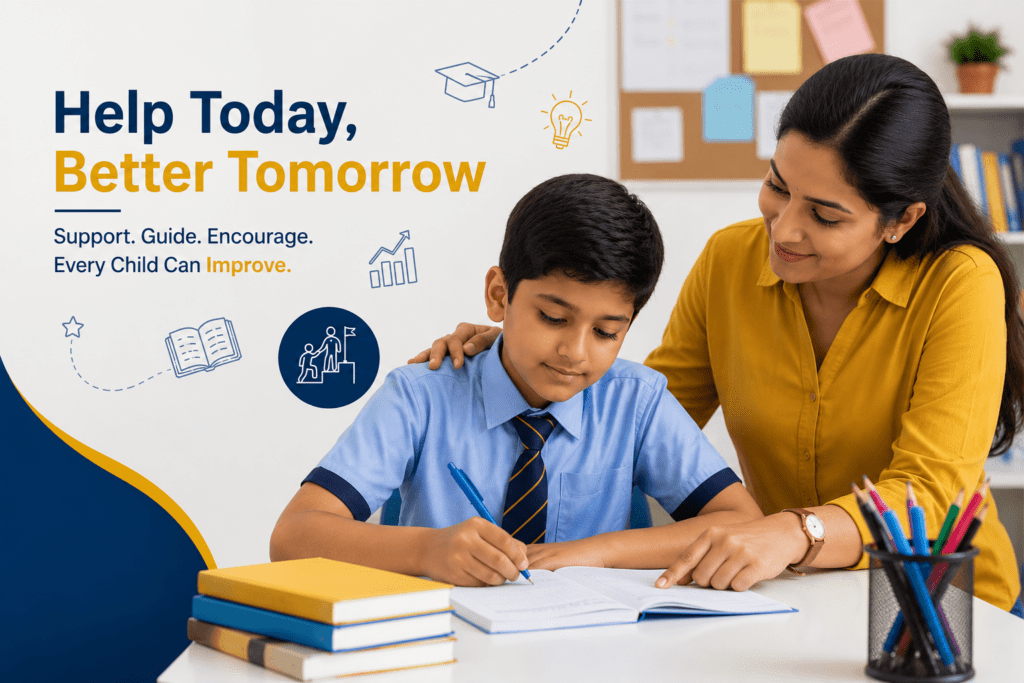
Every child learns differently. Some students grasp concepts quickly, while others may need additional time, guidance, and support. Being weak in a subject does not mean a student cannot succeed. With the right approach, encouragement, and consistent practice, every child can improve academically and build confidence in their abilities.
At Aspire International School, we believe that every student has the potential to learn, grow, and achieve success. Here are ten practical ways to help weak students improve in academics.
1. Understand Why the Student Is Struggling
The first step in helping a student improve academically is identifying the root cause of the difficulty.
Students may struggle because:
- They missed important foundational concepts
- They find certain subjects challenging
- They lack confidence
- They are easily distracted
- They hesitate to ask questions
Once the underlying reason is identified, parents and teachers can provide targeted support.
2. Build Strong Academic Foundations
A strong understanding of basic concepts is essential for future learning.
Parents and teachers should:
- Revise previous lessons regularly
- Explain concepts using simple language
- Use real-life examples and practical applications
- Focus on understanding rather than memorization
When students master the basics, advanced topics become easier to understand.
3. Encourage Students to Ask Questions
Many students remain silent because they fear making mistakes.
Create a supportive environment where students feel comfortable asking questions.
Remind them that:
- There are no silly questions
- Mistakes are part of the learning process
- Asking questions improves understanding
Students gain confidence when they know their thoughts and doubts are valued.
4. Set Small and Achievable Goals
Large academic goals can feel overwhelming.
Instead of focusing only on final results, set smaller goals such as:
- Completing one chapter each week
- Learning five new vocabulary words daily
- Solving a few math problems every day
- Revising one topic at a time
Small successes create motivation and encourage continuous improvement.
5. Practice Consistently
Consistent practice is one of the most effective ways to improve academic performance.
Students can:
- Read lessons daily
- Complete worksheets
- Revise class notes
- Take short quizzes
- Solve practice questions
Even 20–30 minutes of focused study each day can lead to significant improvements over time.
Creating a positive learning environment at home can make regular study habits easier to maintain. Read our guide on How To Make Children Interested In Studying At Home to discover practical ways parents can motivate children to learn with interest and confidence.
6. Make Learning Fun and Engaging
Students learn better when learning feels enjoyable.
Parents and teachers can use:
- Educational games
- Flashcards
- Interactive videos
- Storytelling techniques
- Group learning activities
Fun learning methods increase engagement and improve memory retention.
7. Recognize and Praise Effort
Positive reinforcement helps students stay motivated.
Rather than focusing only on grades, appreciate:
- Hard work
- Consistency
- Improvement
- Participation
- Positive attitudes
Simple encouragement can significantly boost a child’s confidence and willingness to learn.
8. Maintain Strong Parent-Teacher Communication
Academic improvement becomes easier when parents and teachers work together.
Regular communication helps:
- Monitor progress
- Identify learning challenges early
- Create consistent support systems
- Develop effective study routines
A strong partnership between home and school benefits the student’s overall development.
9. Teach Effective Time Management
Poor time management often affects academic performance.
Help students learn to:
- Create a study timetable
- Prioritize important tasks
- Complete homework on time
- Balance study and recreational activities
Good time management reduces stress and improves productivity.
10. Believe in the Student’s Potential
Every child learns at their own pace.
Some students may take longer to understand concepts, and that is completely normal.
The most important thing parents and teachers can do is:
- Stay patient
- Provide encouragement
- Celebrate progress
- Continue offering support
When students believe in themselves, they become more willing to face challenges and keep improving.
Why Academic Improvement Requires Patience
Academic success is not about learning the fastest. It is about continuous growth, effort, and resilience.
Students improve when they:
- Feel supported
- Learn without fear of failure
- Receive constructive guidance
- Develop confidence in their abilities
The journey of learning is different for every child, and progress should always be celebrated.
How Aspire International School Supports Every Learner
At Aspire International School, we create a supportive and inclusive learning environment where every student can thrive.
Our approach focuses on:
- Personalized attention
- Concept-based learning
- Interactive classroom experiences
- Confidence-building activities
- Continuous academic support
We believe every child deserves the opportunity to reach their full potential.
Final Thoughts
Understanding how to help weak students improve in academics starts with patience, encouragement, and the right learning strategies.
By building strong foundations, setting achievable goals, encouraging questions, and creating positive learning experiences, parents and teachers can help students become confident and successful learners.
At Aspire International School, we are committed to helping every child grow academically, emotionally, and personally because every student has the ability to succeed when given the right support and opportunities.
Register today and take the first step towards a brighter future for your child.
Ready to Join a School That Values Discipline and Growth?
Enroll your child at Aspire International School and set them on the path to lifelong success.